In this guide, we help you choose a ceiling medallion that is both historically accurate and properly sized for the room in which it will be installed. We recommend selecting ornamental plaster and ceiling medallions according to the period in which your home was built, while also considering the size and function of the room!

Style
Ceiling medallions from the 1890s
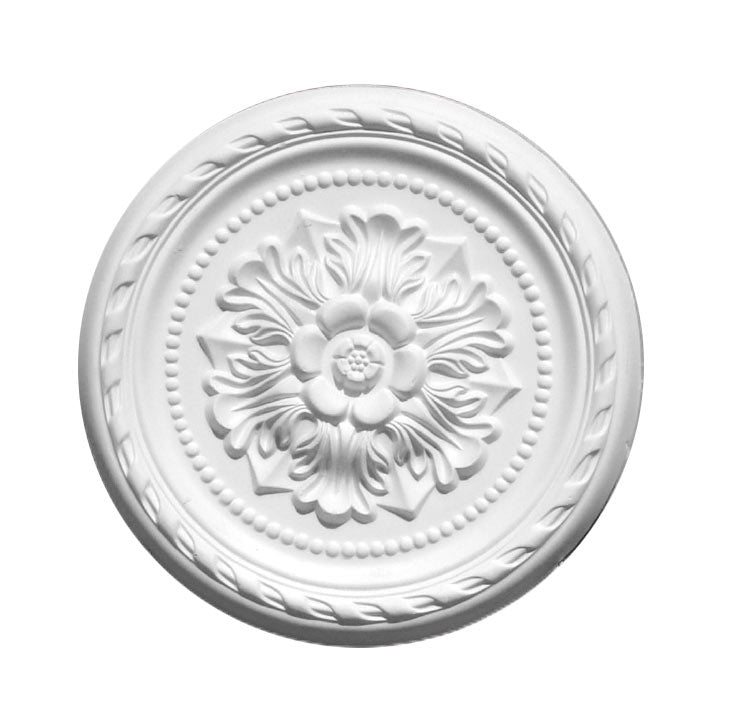
Ceiling medallions from this period were often highly decorative and detailed. The style, called Renaissance Revival, was strongly influenced by earlier centuries with a focus on symmetry and ornamentation. Decorative design elements such as acanthus leaves, floral garlands, and repetitive patterns were common.
Ceiling medallions from the 1900s
Ceiling medallions from the Art Nouveau period differed significantly from the symmetrical, classicist decorations of earlier eras. The Art Nouveau style was characterized by organic forms and a softer decorative language. Inspiration was drawn from the animal and plant kingdoms, and it was not unusual to combine flowers and delicate tendrils with, for example, peacock feathers.
Ceiling medallions from the 1910s
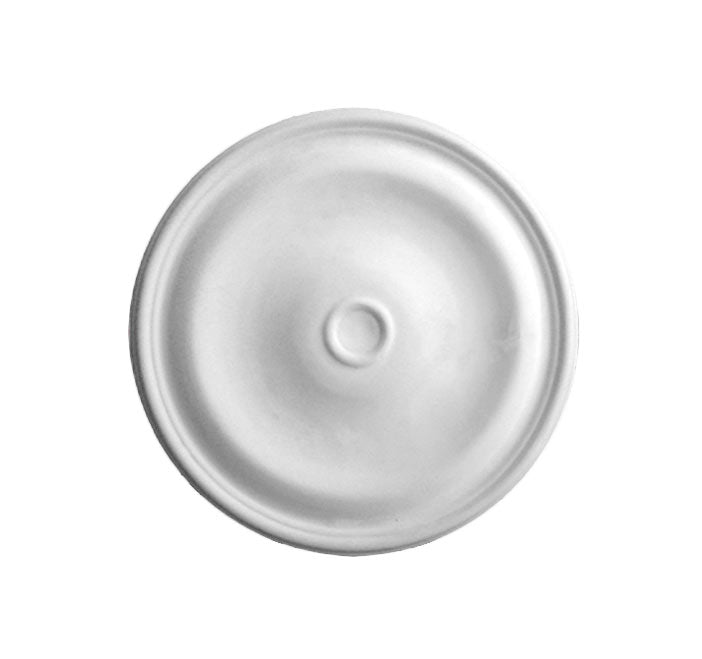
During the 1910s, Swedish interior style was influenced by National Romanticism, a movement that sought to reconnect with Swedish building traditions and craftsmanship. Ceiling medallions became less decorative and more robust in form, with a certain weight and simplicity. Decoration was often very modest, consisting mainly of marked edges, stylized star shapes, or rhombic patterns.
Ceiling medallions from the 1920s
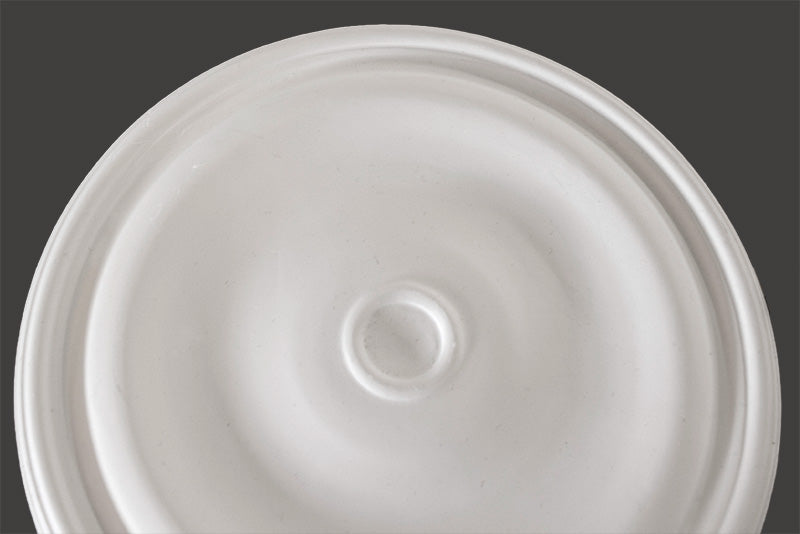
In the 1920s, forms became simpler and more streamlined. The style was inspired by classical antiquity, with symmetry at its core, but without the lavish ornamentation of the 19th century. Ceiling medallions were often relatively plain but well-crafted, with the more decorative ones resembling a stylized flower head or a classical emblem.

Size
A good rule of thumb when choosing a ceiling medallion is that, around the turn of the 20th century, the most care and money were invested in the spaces shown to guests. Extra attention was therefore given to entrances, parlors, and dining rooms, while kitchens, pantries, and bathrooms were decorated more simply.
TIPS: If the room has a high ceiling (e.g. 3200 mm / 126 in. or higher), you can size up even in smaller rooms – it creates better balance.
| Room size in m² | Ceiling medallion diameter Ø | Type of room |
|---|---|---|
| <10 m² (<108 ft²) | 20–40 cm (7.9–15.7 in.) | Small hallway and study. |
| 10–15 m² (108–161 ft²) | 40–50 cm (15.7–19.7 in.) | Bedroom and small dining room. |
| 15–25 m² (161–269 ft²) | 50–65 cm (19.7–25.6 in.) | Living room and parlor. |
| 25–35 m² (269–377 ft²) | 65–80 cm (25.6–31.5 in.) | Lounge and formal room. |
| >35 m² (>377 ft²) | 80 cm (31.5 in.) or larger | Large parlors. |